Feed-water envelope
Current analysis, conductivity or salinity, temperature, turbidity or SDI, hardness, alkalinity, metals, silica, organics and variability.
INDUSTRIAL APPLICATIONS · PROCESS & UTILITY WATER
Connect feed-water variability, process quality, daily output, uptime and site interfaces to the correct industrial DESAL platform.
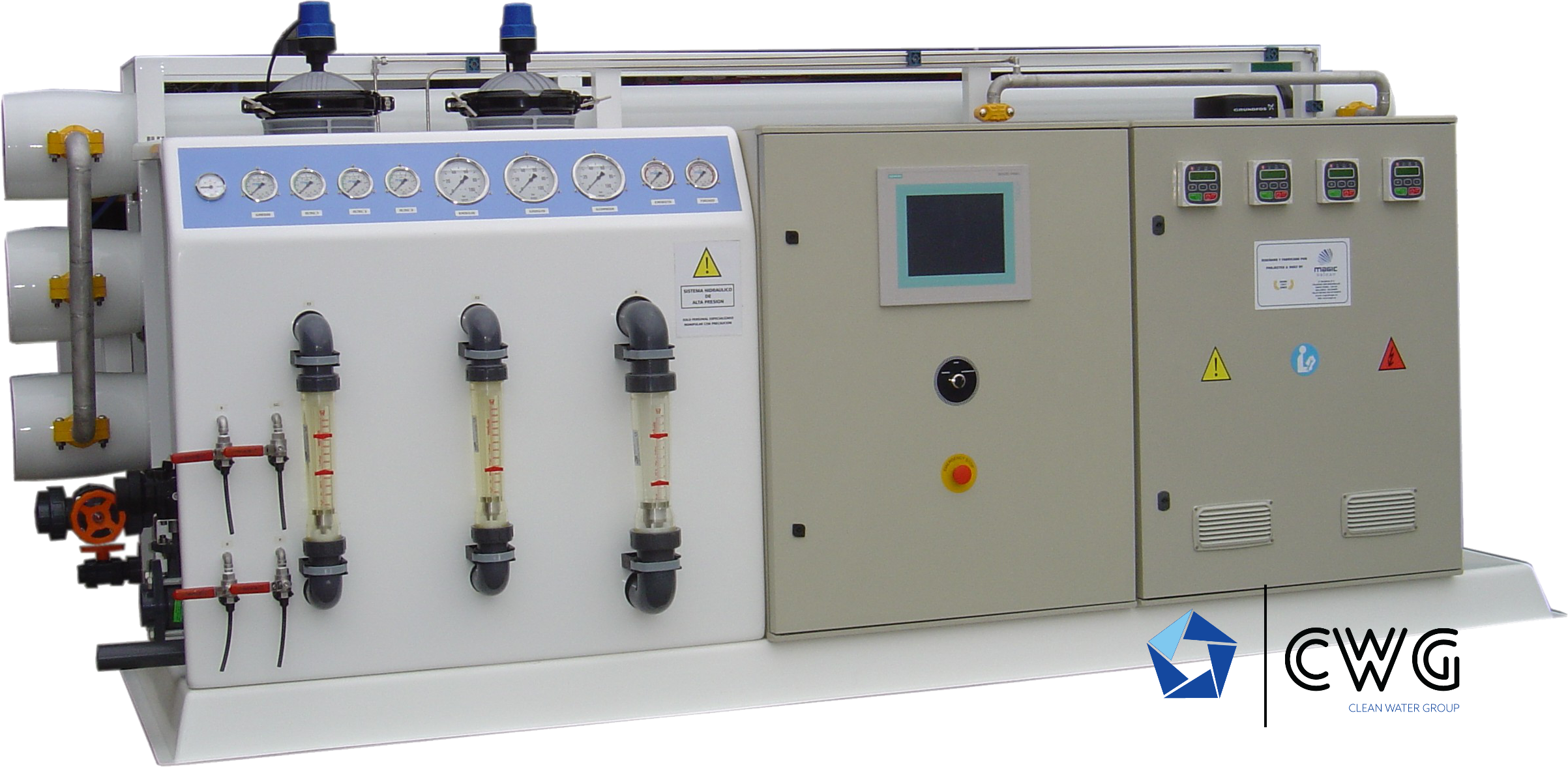
The plant is selected from feed water, required product quality, production duty, availability and site interfaces. Optimising one without the others creates hidden cost or operating risk.
INDUSTRIAL DESIGN BASIS
Six input groups create an auditable basis for process selection and the final proposal.
Current analysis, conductivity or salinity, temperature, turbidity or SDI, hardness, alkalinity, metals, silica, organics and variability.
Define permeate quality at the point of use—not simply ‘RO water’. Downstream equipment and process chemistry set the target.
Required m³/day, hourly production, operating window, peak profile, storage autonomy and future expansion.
Acceptable interruption, duty/standby philosophy, parallel trains, critical spares and maintenance response.
Electrical supply, feed pressure, drainage, chemical facilities, ventilation, communications and available plant-room area.
Intake, feed tank, product storage, discharge, post-treatment and controls interfaces must be assigned before supply scope is frozen.
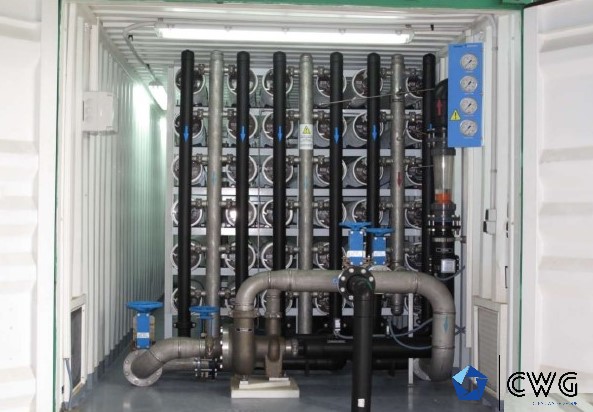 SKID OR CONTAINERIZED INDUSTRIAL DELIVERY
THREE INDUSTRIAL ROUTES
Compact industrial process, wash, make-up and utility-water duty where the feed analysis fits a KP configuration.
WHL, HL, L, M, R and LR options are selected by measured conductivity and product-water requirement.
Open product familySkid-based industrial seawater desalination requiring integrated pretreatment, multiple trains or defined availability.
Capacity bands are engineering envelopes, not fixed SKUs. Final recovery, membranes, materials and performance are project-specific.
Open product familyFactory-integrated delivery where weather protection, reduced site assembly and a defined process battery limit are priorities.
Reference models: 100, 200, 300, 400, 500, 720, 1000 and 1200 m³/day in one or two 40-foot containers.
Open product familyCOMPLETE TREATMENT TRAIN
The exact process is selected from the feed-water risks and required product quality.
ILLUSTRATIVE PLATFORM MATCHES
These examples show product-family routing, not guaranteed plant selections.
AVAILABILITY ARCHITECTURE
A larger single plant is not automatically more resilient. Storage, parallel trains, standby equipment, bypasses and service access must be designed as one operating strategy.
BATTERY-LIMIT CHECK
A clear interface list protects the schedule, cost and performance guarantee.
Send interface listThe Finder supports catalog matching. Engineered XL, containerized BOX DESAL, redundancy and complete industrial process scope continue through technical review.
INDUSTRIAL APPLICATION FAQ
No. Flow defines capacity, but feed-water chemistry, temperature, required permeate quality, operating hours, recovery, pretreatment, storage, availability and site interfaces determine the actual plant. The same nominal flow can require very different equipment.
It is not only a capacity decision. DESAL-SWRO XL is a project-engineered plant platform from 36 to 600 m³/day. BOX DESAL SWRO provides reference containerized capacities from 100 to 1,200 m³/day when factory integration, enclosure and reduced site assembly are advantageous. Site intake, storage and discharge remain project interfaces.
Availability describes the production that must remain during equipment service or a fault. It can be supported by stored reserve, parallel RO trains, duty/standby pumps, instrument redundancy, critical spares and an agreed maintenance response. The design follows the acceptable business interruption.
Not necessarily. RO CIP is the membrane clean-in-place system used to circulate a controlled cleaning solution through the RO train. A customer’s production-line CIP is a separate process demand and may require a specific product-water quality and storage arrangement.
Catalog and reference values support preliminary selection. Guaranteed production, recovery, permeate quality, energy use, chemical consumption and materials are issued only after the project basis is reviewed and approved in the technical proposal.
READY TO DEFINE THE INDUSTRIAL BASIS?
We will identify the correct DESAL platform and the engineering inputs required for a complete technical proposal.