Guest rooms
Occupancy, showers, bathrooms, housekeeping and in-room amenities.
HOTELS & RESORTS · HOSPITALITY WATER SUPPLY
Connect occupancy, kitchens, laundry, pools, landscaping and reserve to a desalination plant designed for the property’s real operating rhythm.
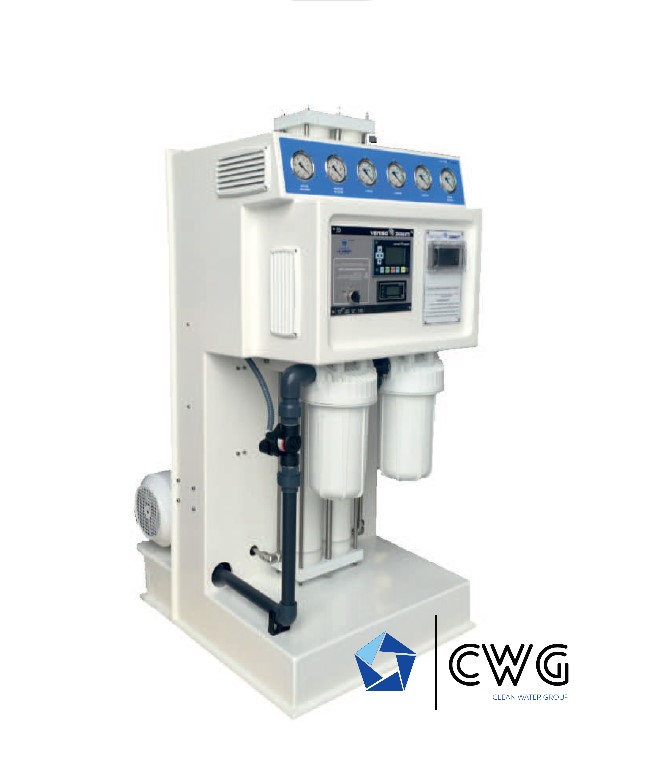
Two hotels with the same number of keys can have completely different water duties. Occupancy, restaurants, laundry, spa, pools, gardens, staff and operating hours must be calculated separately before selecting the plant.
HOSPITALITY DEMAND MAP
Separate each stream so peak occupancy and seasonal services are visible in the daily balance.
Occupancy, showers, bathrooms, housekeeping and in-room amenities.
Food preparation, dishwashing, bars, restaurants and banquet service.
Room linen, towels, spa textiles and any outsourced or on-site operating pattern.
Pool top-up, backwashing, spa facilities and water-feature losses.
Irrigation zones, seasonality, plant sensitivity and alternative water sources.
Cleaning, staff areas, cooling or equipment make-up and maintenance demand.
PRELIMINARY CAPACITY LOGIC
Illustrative examples before design reserve, water analysis, tank autonomy and redundancy.
Select DESAL-BWRO KP or DESAL-SWRO PM-C from the verified water source.
The smallest catalog model above the calculated output is reviewed with reserve.
An engineered seawater plant becomes the primary route beyond compact PM-C duty.
Parallel trains, storage and availability philosophy are defined for the project.
These examples show the arithmetic only. Final capacity must recover the storage level within the agreed operating window and availability scenario.
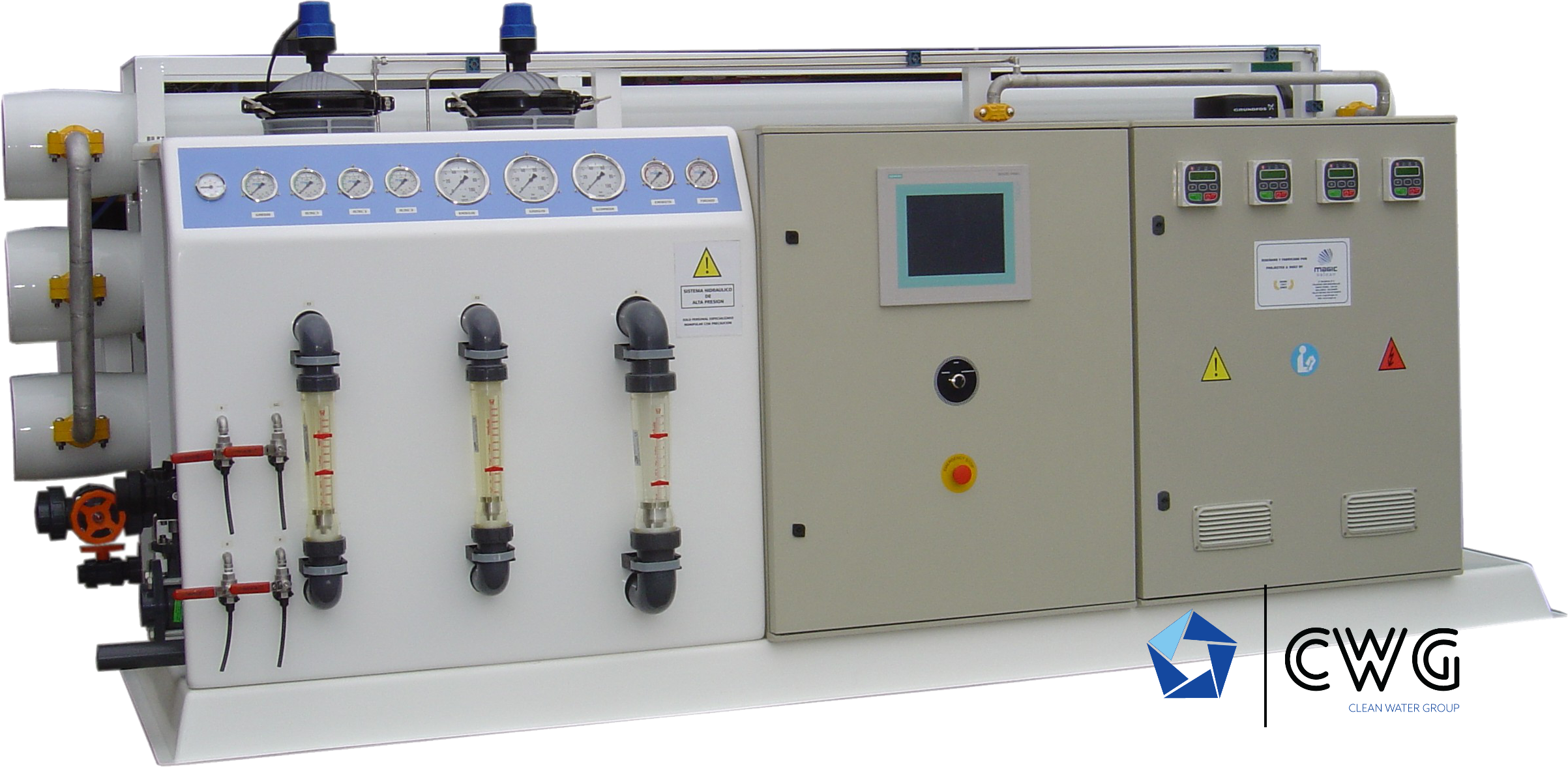 COMPACT TO ENGINEERED HOSPITALITY DUTY
THREE PLATFORM ROUTES
Hotels with a verified brackish well, borehole or other brackish feed source.
WHL, HL, L, M, R and LR configurations are selected from measured conductivity and required product-water quality.
Open product familyBoutique hotels, small resorts and defined hospitality loads within the compact fixed-installation range.
Ten C configurations provide a catalog starting point before intake, pretreatment and operating conditions are reviewed.
Open product familyLarger resorts, continuous demand, complex intakes or projects requiring redundancy and integrated plant engineering.
The final number of trains, pretreatment, recovery, storage interfaces, controls and guaranteed output are project-specific.
Open product familyAVAILABILITY & WATER SECURITY
The correct arrangement depends on how long the property can tolerate reduced production.
Define usable storage, minimum operating level, refill time and required autonomy at design occupancy.
Multiple trains can preserve partial output during service and create a staged response to seasonal demand.
Review electrical supply, backup generation, feed-water interruption and restart conditions.
Provide bypasses, isolation, consumables, chemical access and a service plan that fits hotel operations.
QUALITY BY END USE
Define the required water quality at each destination before finalising post-treatment and distribution.
DATA FOR A TECHNICAL REVIEW
Send current information; any missing engineering inputs will be identified during review.
Send hospitality dataChoose the source-water class and required output to identify a catalog starting point. Engineered XL and redundancy decisions continue through project review.
HOTEL & RESORT FAQ
Use operating records whenever possible. Separate guest rooms, kitchens, laundry, pools and spa, landscaping, cleaning, staff and utility uses. Apply expected occupancy and seasonality to each stream, then define storage and operating hours before calculating RO output.
Usually not. Product-water storage supplies short demand peaks while the RO plant produces steadily. The design must balance daily production, tank volume, refill time and reserve, rather than simply matching the highest momentary building flow.
Redundancy depends on acceptable interruption, alternative water sources, storage autonomy, occupancy and maintenance response. Critical hospitality sites may use parallel trains, duty/standby pumps or additional stored reserve. The required availability philosophy should be agreed before final sizing.
Not automatically. Potable distribution, kitchens, laundry, boilers, cooling, irrigation and pools can have different quality or post-treatment requirements. Define the intended uses so remineralisation, disinfection and any separate treatment loops can be engineered correctly.
Provide a current feed-water analysis and temperature range, demand schedule, required product-water quality, operating hours, storage, intake and discharge conditions, utilities, plant-room constraints and the required level of availability. Guaranteed performance belongs to the approved technical proposal.
READY TO DEFINE THE HOSPITALITY DUTY?
We will identify the correct DESAL platform and define the storage, pretreatment and availability inputs required for final engineering.